
A delete kit removes the DPF, EGR, and DEF systems from a 6.7 Powerstroke and retunes the computer to ignore the missing parts. It is illegal on any truck driven on public roads in Canada and the United States. Most owners look into a delete after an EGR cooler bill or a DEF system fault, and both problems have legal repairs that cost less than the delete once you count the real risks.
- A delete kit removes the DPF, EGR cooler and valve, and DEF/SCR hardware, plus a tune that blinds the computer to the missing parts
- Tampering with emissions equipment breaks federal law in both Canada and the United States, with civil penalties that run into the thousands of dollars per violation
- On the 6.7 Powerstroke, EGR cooler failure and DEF system faults drive most delete interest, and both are repairable without removing anything
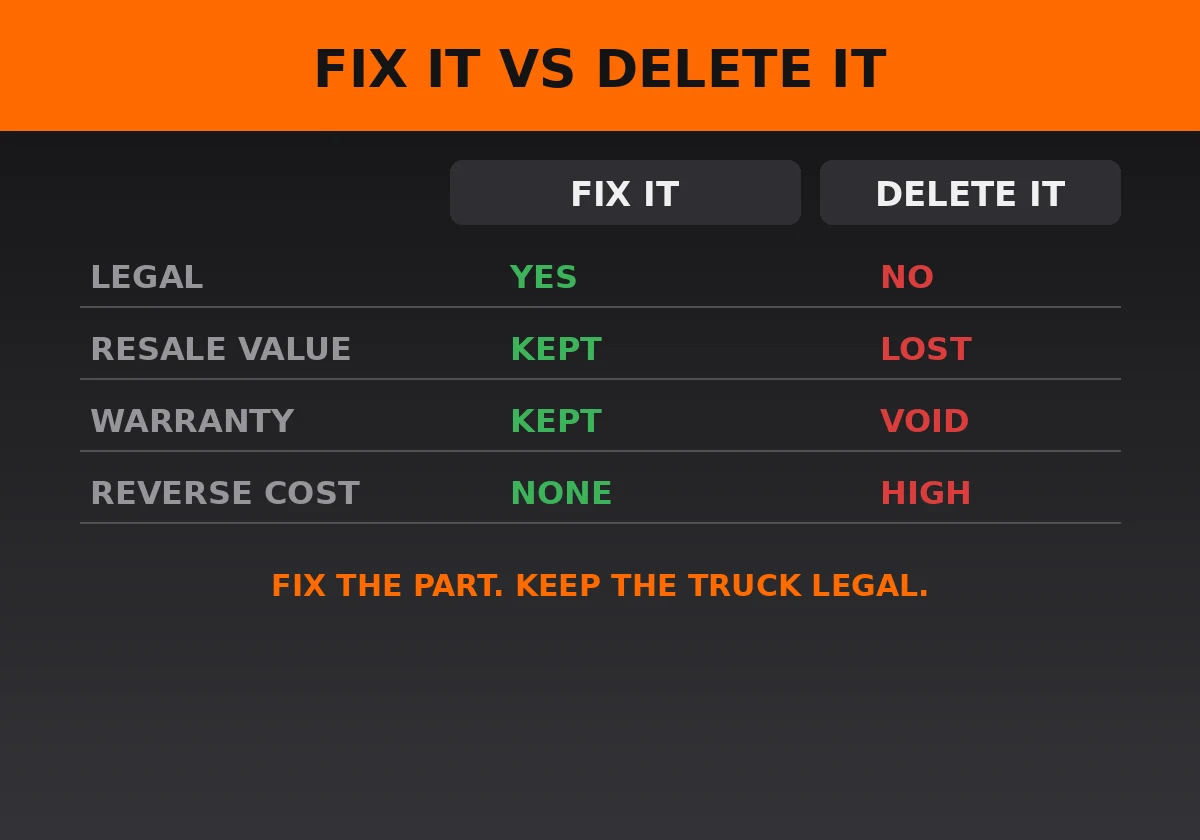
- Deleted trucks are hard to sell, lose warranty coverage, and cost real money to return to stock
Somebody asks me about deleting a 6.7 Powerstroke about twice a month. The truck threw a code, the dealer quoted a repair that hurt, and somebody in a forum said a delete kit and a tune would end the problem forever. I understand why that pitch works. I have had my hands inside enough 6.7 Powerstrokes to know which bills make owners start shopping for one. I am going to talk you out of it anyway, then show you what actually fixes the truck. For background on this engine, see my honest problems list for the 6.7 Powerstroke.
What a delete kit actually removes
A delete kit for the 6.7 Powerstroke is hardware plus a tune. The hardware removes the diesel particulate filter, the EGR cooler and valve, and the DEF and SCR components. Straight pipe sections replace the DPF and SCR in the exhaust. The tune reprograms the engine computer so it stops looking for the missing equipment and stops throwing codes about it.
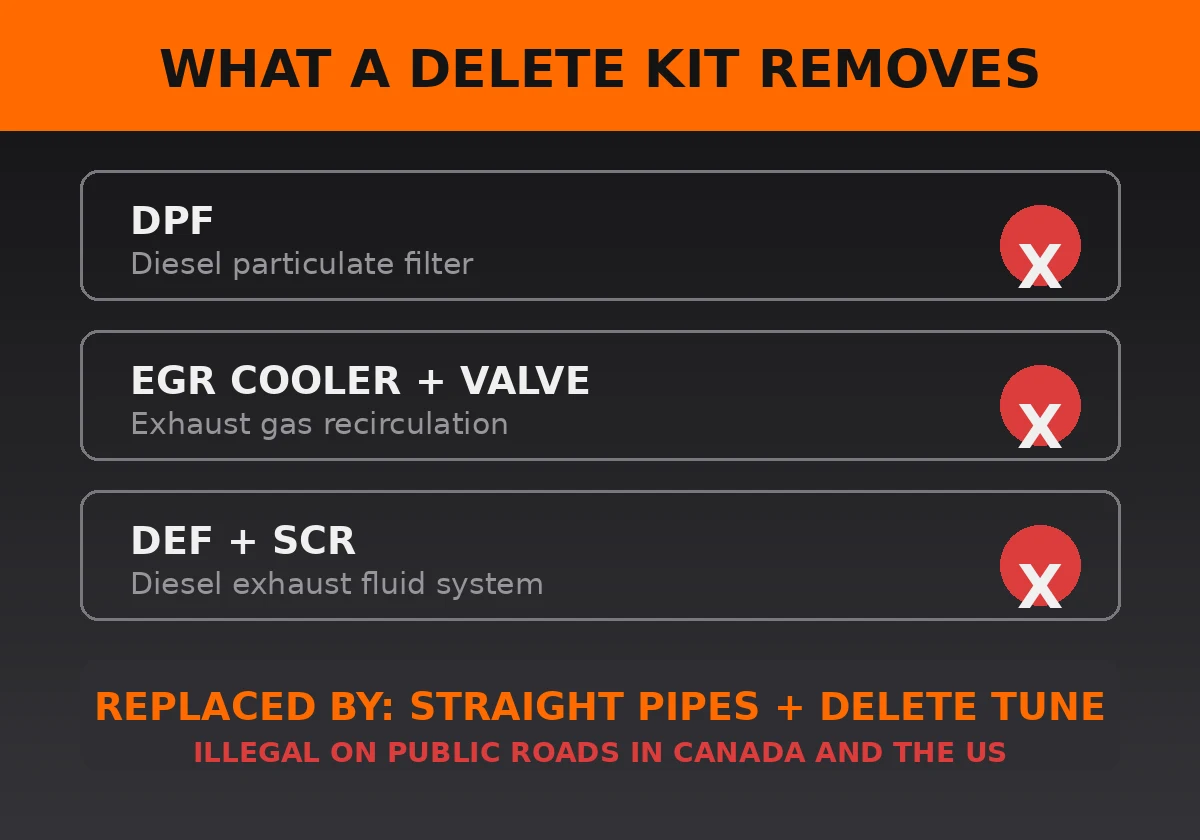
The appeal is real and I will not pretend otherwise. The truck stops doing regens, stops using DEF, and stops throwing EGR codes because the equipment that throws them is gone. But every one of those gains comes from removing equipment the truck is legally required to carry. There is no version of this that keeps the truck compliant.
Why Powerstroke owners start shopping for one
Nobody wakes up wanting to break the law. They wake up with a check engine light and a quote. On the 6.7 Powerstroke the trigger is almost always one of three things: EGR cooler failure, which peaks on 2011 to 2014 trucks and is the most common expensive repair I do on this engine; DEF system faults, usually a NOx sensor or the DEF heater, which drop the truck into limp mode at the worst moment; or DPF trouble on trucks that do short trips and long idle hours.
I wrote guides to EGR cooler failure symptoms and forced regen vs highway regen so you can diagnose your truck before spending money. Add in the turbo actuator problems these trucks can develop, and you get an owner who is tired of codes and ready to believe the forum pitch.
The law in the United States
Removing or defeating emissions equipment on a highway vehicle violates the Clean Air Act. This is federal law and it applies in every state, whether or not your state runs emissions testing. Civil penalties reach up to 59,114 dollars per violation for sellers and manufacturers, and up to 5,911 dollars per tampering event for everyone else, with each truck counting separately.
The EPA has spent years shutting down the companies that sell delete kits and tuning, with settlements in the millions of dollars, and shops that install deletes are in the crosshairs too. I covered how this played out for one of the biggest names in Mini Maxx tuner explained.
The law in Canada
Under federal law, the Canadian Environmental Protection Act and the On Road Vehicle and Engine Emission Regulations make it illegal to tamper with or remove emissions equipment on a road vehicle. Every province has its own anti tampering rules on top of that. A deleted truck is not compliant anywhere in the country, no matter how loosely your province enforces the rule today.
What confuses Ontario owners is testing. Ontario ended its Drive Clean light duty emissions testing program in April 2019, and under the current DriveON system only heavy duty diesel commercial vehicles over 4500 kilograms get emissions tests. A personal F 250 is never called in for a test. Some owners read that as permission. It is not. Federal law still prohibits the tampering, and a deleted truck can be caught at a roadside inspection, where the conversation starts with an officer who already knows what a straight pipe looks like.
What the delete costs beyond the fine
This is the part the forums skip. Dealers in my area will not take a deleted truck on trade. The ones who will price it like a problem. A tuned computer shows its history even if you bolt the hardware back on, so you cannot quietly undelete it at trade in time. Private buyers who want a clean truck, which is most buyers, disappear entirely. Warranty claims get denied the moment a tech sees the missing equipment, and insurance can get complicated after a serious claim too.
Then there is the cost of undoing it. Returning a deleted 6.7 Powerstroke to stock means sourcing a DPF, SCR hardware, an EGR cooler and valve, and the factory tune, plus the labor.
What to do instead
Fix what is actually broken, then make the truck better without touching the emissions system.
First, diagnose before you buy parts. Half the DEF codes I see are a heater or a sensor, not a dead system. Half the EGR codes are a valve that cleans up fine, not a cracked cooler. A proper diagnosis costs a fraction of the parts cannon approach.
Second, fix the driving pattern if the DPF is the complaint. These trucks need highway miles. Short trips and hours of idling plug the DPF on any diesel. Regular highway driving, correct low ash oil, and professional DPF cleaning when needed keep the system working for the life of the truck.
Third, if you want more performance, look at emissions intact tuning. You can get real, noticeable gains while keeping every emissions device on the truck and working. It costs more than a delete tune, but it keeps the truck legal, sellable, and warranty friendly.
The bottom line
A delete kit is a simple answer to real problems, and that is exactly why it is tempting. The EGR cooler on the 6.7 Powerstroke does fail, the DEF system does frustrate, and the delete pitch sounds clean. But it makes your truck illegal in both countries, it follows the truck through every future sale, and the enforcement trend is moving in one direction. Fix the part, keep the system, and spend your performance budget on tuning that keeps the truck legal.
For the full picture of how deletes are treated by the law, read what a DPF delete really means and why it is illegal.
Frequently asked questions
Should I buy a delete kit for my 6.7 Powerstroke?
No, not for a truck you drive on public roads. The kit is straightforward hardware, but installing it takes the truck out of compliance with emissions law in Canada and the United States. Diagnose and fix the actual fault instead, then look at emissions intact tuning if you want better drivability.
What emissions parts fail most on the 6.7 Powerstroke?
The EGR cooler, especially on 2011 to 2014 trucks, and the DEF system, usually the NOx sensors or the DEF heater. Both faults throw codes and can trigger limp mode. Both are common, both are repairable, and neither requires removing the emissions system.
Is delete tuning legal if it comes through a device like EZ Lynk?
The device does not change the law. Any tune that removes or defeats emissions equipment on a highway vehicle breaks the Clean Air Act in the US and federal anti tampering rules in Canada, no matter which handheld or phone app loads it. Emissions intact tuning is the legal way to get more from the engine.