
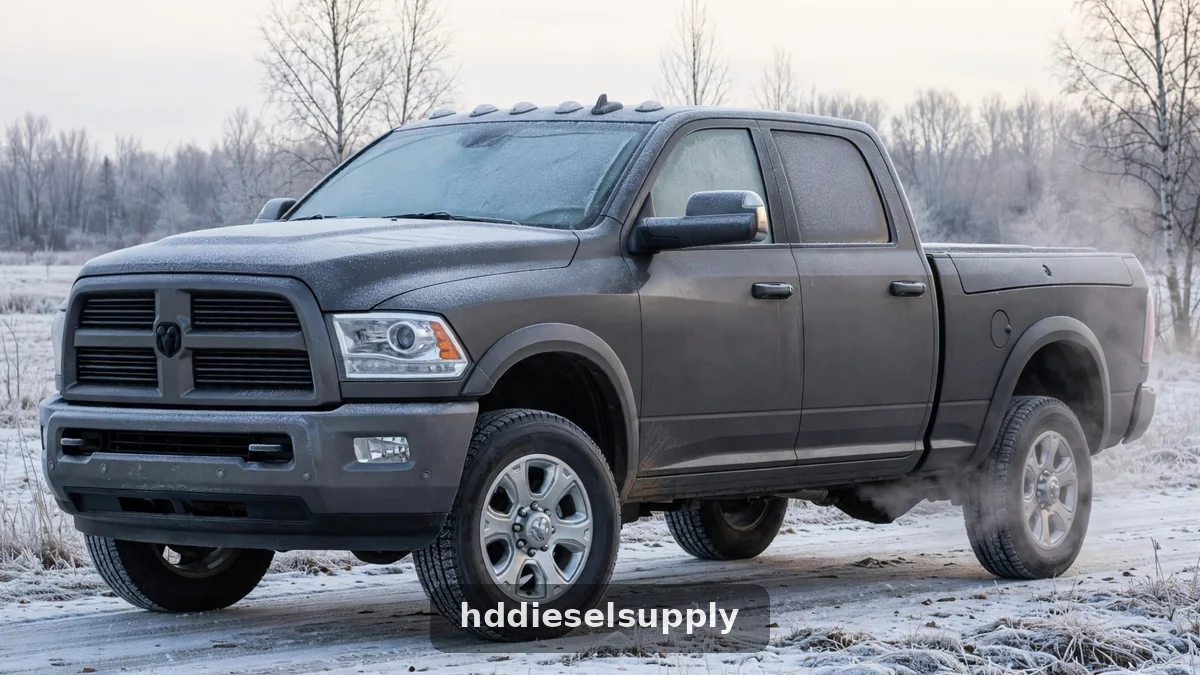
The main pro of a 6.7 Cummins grid heater delete is that it removes the heater mounting bolt that can loosen, fall into the intake, and wreck the engine on 2007 to 2022 Ram trucks. The main con is harder cold starts with longer cranking, rougher running, and more smoke on cold mornings. It is worth it if the bolt risk worries you more than cold starts do, and it is not worth it if your truck sits outside through a Canadian winter.
- Biggest pro: the bolt-drop failure is gone for good, because the heater and its bolt are out of the intake entirely.
- Biggest con: cold starts get harder, with longer cranking and rougher running on cold mornings.
- It is not an emissions delete — the grid heater warms intake air for cold starts, it does not control emissions.
- If you want the bolt risk gone but still want cold-start heat, a bolt-replacement kit keeps the heater and swaps the bolt for a safer design.
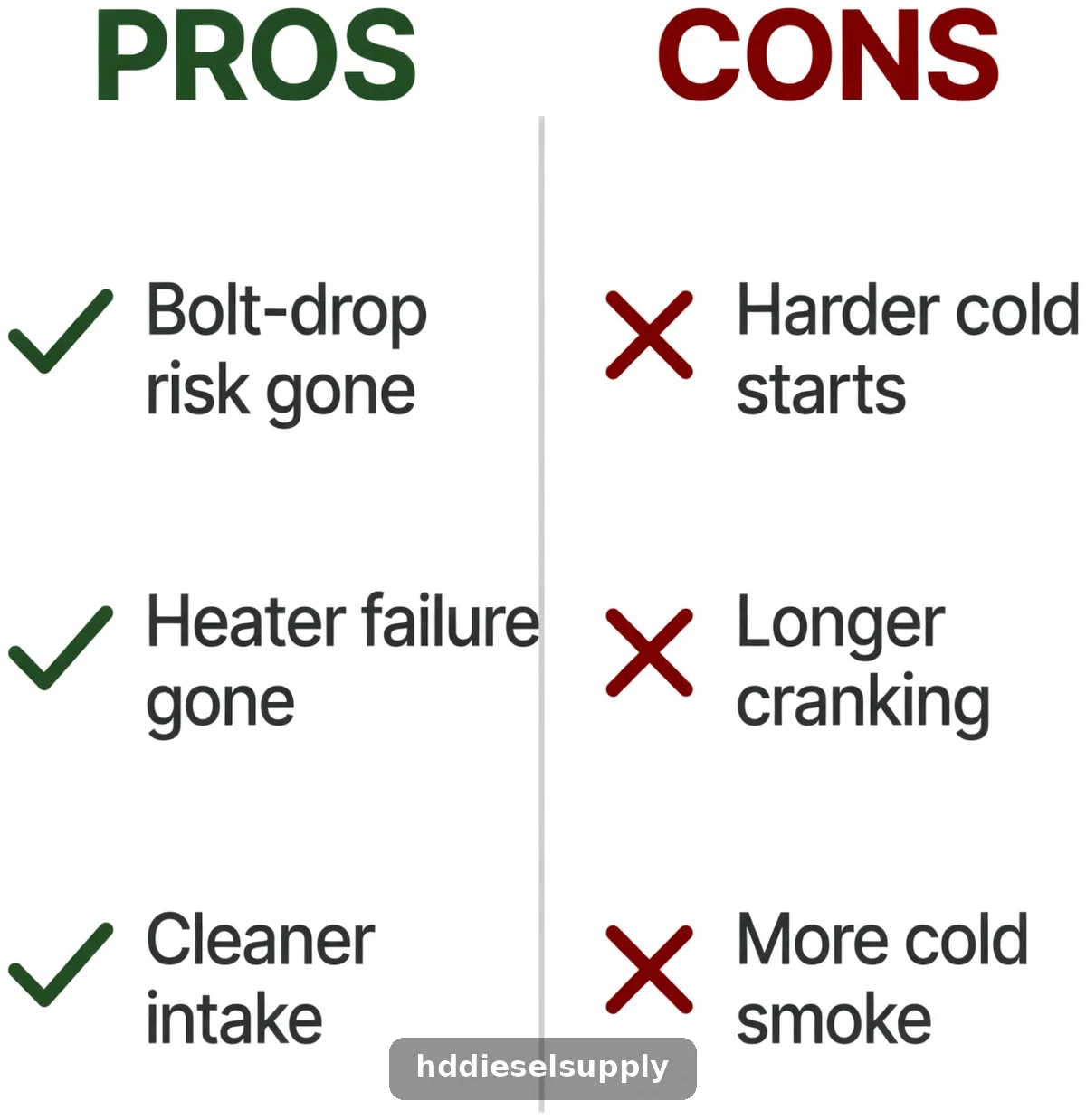
The short version first: a grid heater delete trades easy cold starts for peace of mind. Here is the trade laid out plainly, so you can decide which side matters more to you.
The pros and cons at a glance
| Pros | Cons |
|---|---|
| Removes the mounting bolt that can loosen, fall into the intake, and get sucked into the engine | Harder cold starts: longer cranking, rougher running, more smoke on cold mornings |
| The bolt-drop failure is gone for good — there is nothing left in the intake to fall in | You lose the heater that warms intake air, which is what Cummins uses instead of glow plugs |
| A simple job in concept: heater out, delete plate in | A block heater helps but does not replace the grid heater, since it warms the block and coolant, not the intake air |
| Not an emissions delete — the grid heater warms air for cold starts, it does not clean exhaust | Any modification can have warranty and resale consequences, so check your own situation first |
| No more wondering whether the bolt is loosening | No going back to easy winter starts unless the heater is refitted |
If you only read one line of this post, read this one: the delete is worth it when the bolt worries you more than cold starts do, and it is not worth it when cold starts worry you more than the bolt does.
The pro that matters: the bolt is gone
On 2007 to 2022 Ram trucks, the grid heater mounting bolt can loosen over time, fall into the intake, and get sucked into the engine with catastrophic results. It is rare but devastating. There is no warning light for it and no cheap repair after it happens.
A delete removes the heater and the bolt together and fits a delete plate in its place. That is the whole appeal. Not power, not sound, not fuel economy — just one catastrophic failure taken off the table permanently. For owners who have read the stories or seen the damage, that alone settles it.
The con that matters: cold starts get worse
Cummins engines do not use glow plugs. The grid heater, an electric heating element in the intake manifold, is what warms the incoming air so the engine fires cleanly on a cold morning. Take it out and the engine has to start on cold air.
What that feels like: longer cranking, a rougher first minute, and more smoke until the engine warms up. The truck will still start in most conditions, but it will let you know the heater is missing. A truck parked outside overnight in a prairie winter will show it every morning. A truck in a heated shop will barely show it at all. Where the truck sleeps decides how big this con is.
The middle option most people miss
You do not have to choose between the bolt risk and the heater. An aftermarket kit replaces the factory bolt with a safer design while keeping the heater in place. The risky bolt is gone, the cold-start heat stays, and winter mornings do not change.
If you are torn between the two columns in the table above, this is the option that gives you most of the pro without the main con. It is the one I point cold-climate owners toward first.
What it will not do
It will not add power. It will not improve fuel economy in any way you would notice. It will not make the truck louder or faster. If someone is selling it on performance, they are selling you something this delete does not do. Its only job is removing a failure risk, and it does that job well.
The verdict
Delete the grid heater if the bolt-drop risk is the thing that bothers you and you can live with harder cold starts — a truck that sleeps inside, works in mild weather, or already gets plugged in every night. Keep the heater and fix the bolt instead if your truck sits outside through a Canadian winter and easy cold starts matter to you.
For the full explanation of what the heater is, what the delete kit changes, and why owners do it, read our 6.7 Cummins grid heater delete guide.
Frequently asked questions
What is the biggest pro of a 6.7 Cummins grid heater delete?
It removes the grid heater mounting bolt from the intake. On 2007 to 2022 Ram trucks that bolt can loosen, fall in, and get sucked into the engine with catastrophic results. With the heater deleted, that failure cannot happen.
What is the biggest con of a 6.7 Cummins grid heater delete?
Harder cold starts. Expect longer cranking, rougher running at first, and more smoke on cold mornings. In a Canadian winter, you will feel that difference every day the truck sits outside overnight.
Does a grid heater delete add power?
No. That is not what this delete is for. It removes a cold-start heater and the bolt that holds it. Any power claims attached to it are hype — the point is removing a failure risk, not gaining horsepower.
Who should not delete the grid heater?
Anyone whose truck sits outside through cold winters and who values easy cold starts. If that is your truck, look at a bolt-replacement kit instead — it removes the risky bolt and keeps the heater working.