
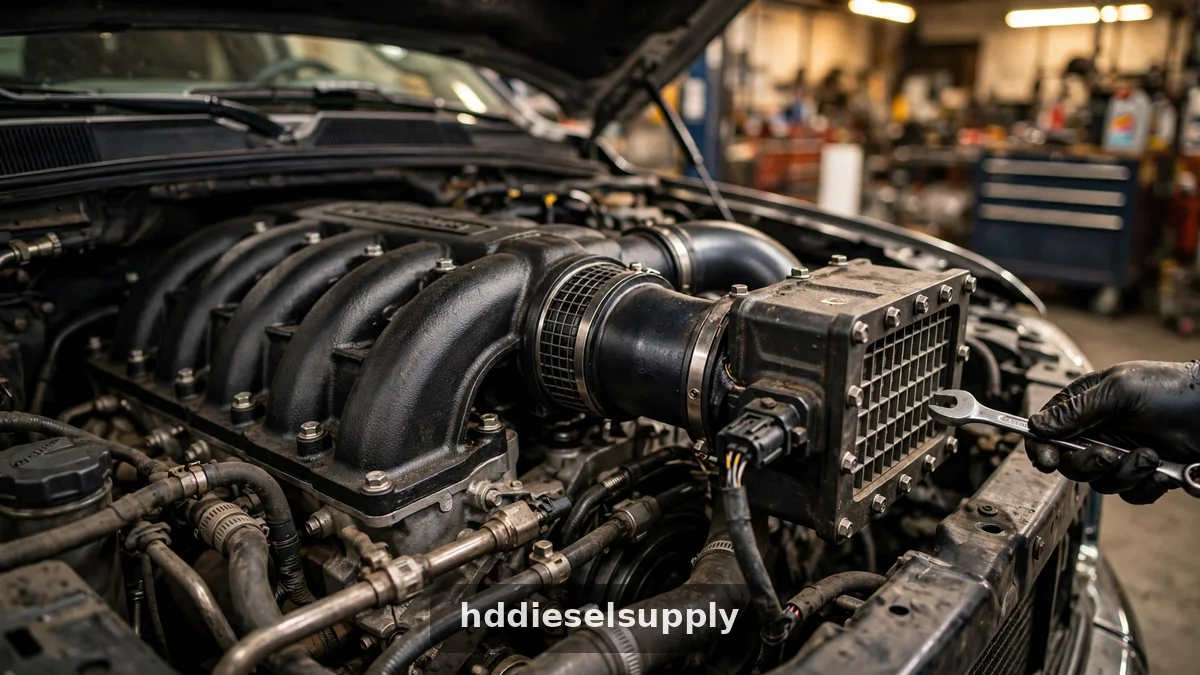
A 6.7 Cummins grid heater delete removes the intake air heater and its mounting bolt from the intake manifold and replaces the heater with a delete plate. Owners do it because the heater's mounting bolt can loosen, fall into the intake, and get sucked into the engine, which is rare but catastrophic. The trade-off is harder cold starts, which matters a lot in a Canadian winter, and the grid heater is not emissions equipment, so this is not an emissions delete.
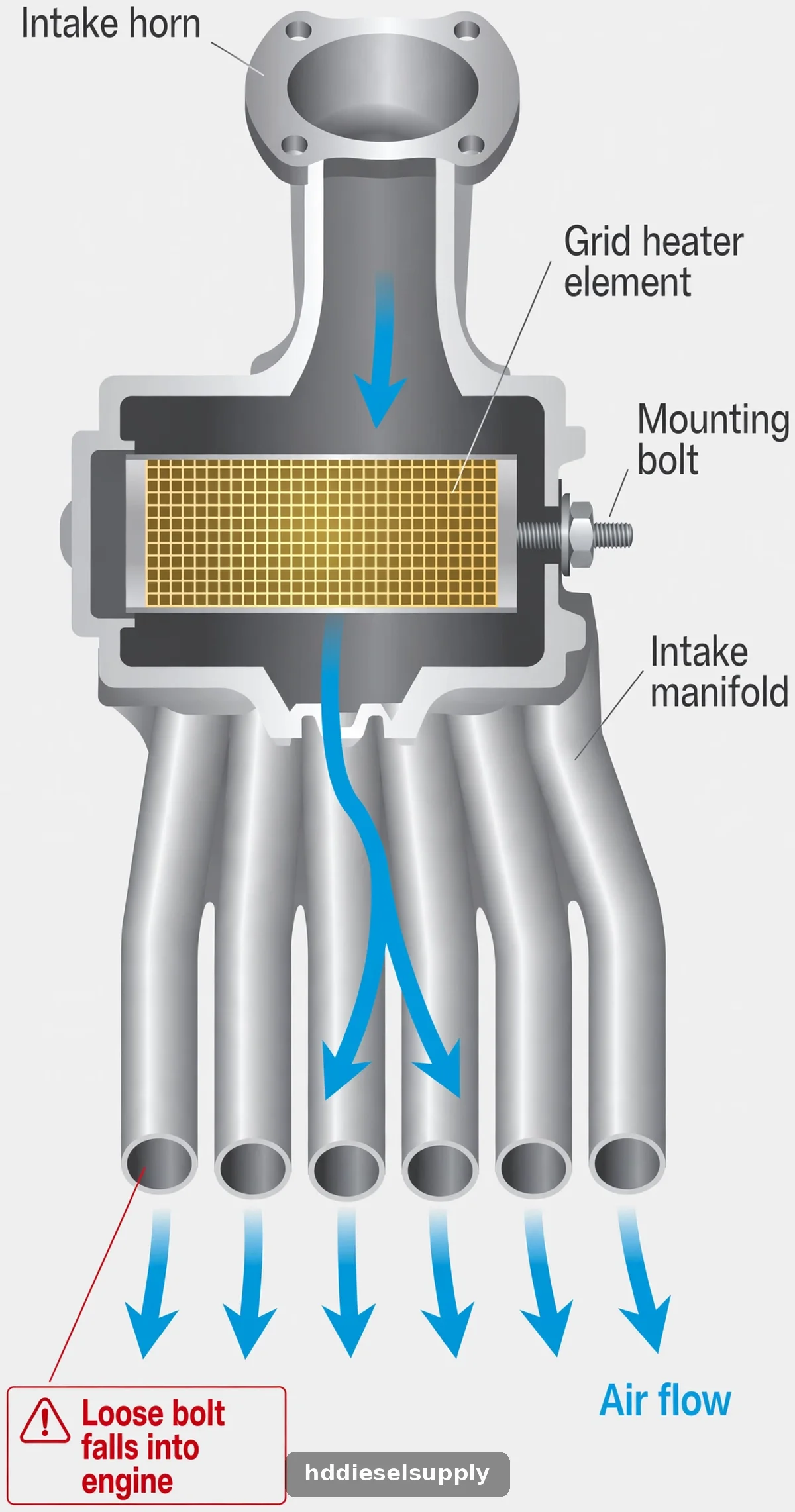
- The grid heater is an electric heating element in the intake manifold that warms incoming air for cold starts. Cummins engines use it instead of glow plugs.
- On 2007 to 2022 Ram trucks, the grid heater mounting bolt can loosen over time, fall into the intake, and get sucked into the engine. It is rare but devastating.
- A grid heater delete kit removes the heater and the bolt with it and fits a delete plate in its place, so the bolt-drop risk is gone for good.
- The grid heater is not emissions equipment, so removing it is not an emissions delete — but cold starts get harder, and that is a real cost in Canada.
I get asked about this one a lot, usually by an owner who just read a forum thread about a bolt dropping into a 6.7 Cummins and wrecking the engine. The story is real, the risk is real, and the delete is a real fix for it. But it is not a free fix. You are giving up your cold-start heater, and in Alberta that is something you feel every January morning. Here is the whole picture, straight up.
What is the grid heater on a 6.7 Cummins?
Cummins engines do not use glow plugs. Instead they use a grid heater, an electric heating element in the intake manifold that warms incoming air for cold starts. When you turn the key on a cold morning and see the wait-to-start light, that is the grid heater doing its job. It heats the air going into the cylinders so the diesel ignites cleanly instead of cranking and cranking and blowing white smoke.
Our grid heater glossary entry covers the basics if you want the short version.
What does a grid heater delete kit do?
A grid heater delete kit takes the heater out of the intake manifold and fits a delete plate in its place. The heater is gone, and the mounting bolt goes with it. That is the whole point of the kit. With no heater and no bolt sitting above the intake, there is nothing left to fall into the engine.
That is different from the other kind of kit you will see sold for this same problem. An aftermarket bolt-replacement kit keeps the heater and swaps the factory bolt for a safer design. The delete goes further: it removes the heater entirely. Both solve the bolt problem. Only the delete also takes away your cold-start heat.
Why do owners delete the grid heater?
Because of the bolt. On 2007 to 2022 Ram trucks, the grid heater mounting bolt can loosen over time, fall into the intake, and get sucked into the engine with catastrophic results. It is rare but devastating — the kind of failure that does not give you a warning light first. One day the truck runs fine, the next day the engine is done.
That is why owners do this delete. It is not about power and it is not about sound. Nobody deletes a grid heater to go faster. They do it to remove a small part that can cause a very big bill. Once the heater and bolt are out, that failure cannot happen to your truck.
For the wider picture on what holds up and what does not on these trucks, read our 6.7 Cummins reliability guide.
Is a grid heater delete an emissions delete?
No, and this is where the grid heater delete is different from the deletes most people argue about. The grid heater warms incoming air for cold starts. It does not clean the exhaust, it does not recirculate exhaust gas, and it does not trap soot. It is not emissions equipment.
An EGR delete or a DPF delete removes equipment that exists to control emissions. A grid heater delete does not. That does not mean you should skip thinking before you do it — any modification to a truck can have warranty and resale consequences, and it is worth checking your own situation first — but it is not the same category of job, and it should not be talked about as if it were.
What happens on a cold start without a grid heater?
This is the trade-off, and I will not soften it. Without the heater, cold starts get harder. Expect longer cranking, rougher running for the first minute or so, and more smoke on a cold morning. The engine will still start in most conditions, but it will complain about it, and you will hear it.
A block heater helps, and if you live somewhere cold you should already be plugging in. But a block heater warms the engine block and the coolant. It does not warm the air coming through the intake the way the grid heater does. It makes a cold start easier, it does not replace the heater.
So be honest with yourself about where you live and how the truck gets used. A truck that sleeps in a heated shop and works in mild weather will barely notice the heater is gone. A truck that sits outside overnight in a prairie winter will notice every single morning. That is the real cost of this delete, and it is paid in cold starts, not in dollars.
Should you delete it, or just fix the bolt?
It comes down to one question: how much do cold starts matter to you?
If the bolt risk keeps you up at night and you are willing to live with harder cold starts, the delete ends the worry for good. The bolt is gone, the failure is gone, and there is nothing left to check.
If you want the bolt risk gone but you still want the heater working on cold mornings, look at the bolt-replacement kit instead. You keep the cold-start help, you lose the failure-prone bolt, and you do not have to change how the truck starts in winter.
Either way, do not ignore the problem. The failure is rare, but the damage is catastrophic, and knowing about it is the cheap part. Pick the fix that fits how you use the truck, and get it done before the bolt makes the decision for you.
The bottom line
A 6.7 Cummins grid heater delete is a simple, honest trade. You remove the heater and its mounting bolt, fit a delete plate, and the bolt-drop failure can never happen to your engine. In return you give up your cold-start heater, and in a Canadian winter that is a real loss. It is not an emissions delete, it will not make the truck faster, and it is not the right call for every owner. But for a truck that works hard and an owner who wants that one catastrophic risk off the table, it is a fix that makes sense — as long as you go into it knowing what the cold mornings will cost you.
Frequently asked questions
What does a 6.7 Cummins grid heater delete do?
It removes the grid heater from the intake manifold and replaces it with a delete plate. The heater's mounting bolt goes with it, so the bolt can no longer loosen and fall into the engine.
Is a grid heater delete an emissions delete?
No. The grid heater warms incoming air for cold starts. It does not clean exhaust or control emissions the way an EGR, DPF, or SCR system does, so removing it is not the same thing as deleting emissions equipment.
Will my truck still start in winter without a grid heater?
Yes, in most cases, but expect longer cranking, rougher running, and more smoke on cold mornings. A block heater helps, but it warms the engine block and coolant, not the intake air, so it is not a straight replacement for the grid heater.
Is there an option besides a full delete?
Yes. An aftermarket kit replaces the factory bolt with a safer design while keeping the heater in place. If cold starts matter to you and you only want the bolt risk gone, that is the option to look at first.