
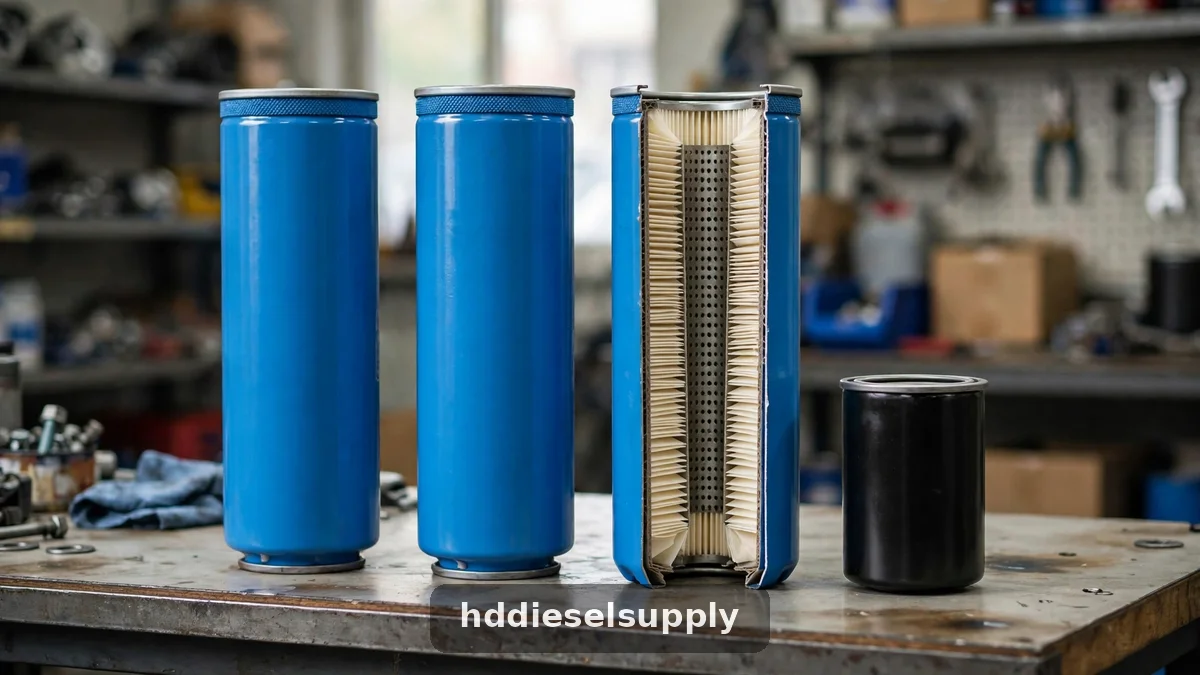
A PPE oil filter is an aftermarket spin-on oil filter from Pacific Performance Engineering, built with more filter media and finer filtration than the stock filter it replaces. They are made for Duramax, Cummins and Powerstroke diesels, and the honest verdict is that a quality filter changed on schedule matters more than the brand on the box.
- PPE is Pacific Performance Engineering, an aftermarket diesel parts brand founded in 1985. Its oil filters are direct replacements for the stock filter on Duramax, Cummins and Powerstroke diesels.
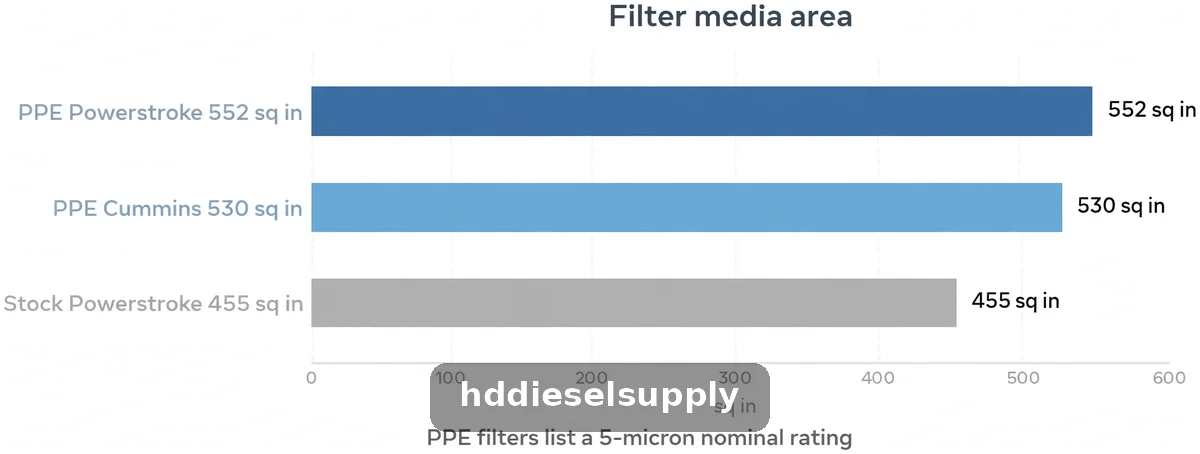
- The listed difference from OEM is more filter media and finer filtration: the Cummins filter lists 530 square inches of media at a 5-micron nominal rating, 30 percent more than stock.
- The tall L5P Duramax filter lists 522 square inches of 5-micron media and replaces the AC Delco PF26, but the deep version needs a fuel coolant pump relocation kit for clearance.
- An aftermarket filter makes sense if you tow hard, run long miles, or want the extra capacity. A stock filter changed on time still does the job on a truck that works for a living.
Search for an oil filter for a Duramax, Cummins or Powerstroke and the name PPE shows up fast. Pacific Performance Engineering has been building aftermarket diesel parts since 1985, and its oil filters are one of the most talked about upgrades in the filter aisle. I am a Red Seal heavy duty mechanic and I have cut open enough oil filters to know what matters and what is marketing. Here is the straight version.
What is a PPE oil filter?
A PPE oil filter is a spin-on engine oil filter made by Pacific Performance Engineering, an American aftermarket company that started out installing other companies' diesel performance kits and now builds its own parts for Duramax, Cummins and Powerstroke trucks.
It is a direct replacement for the stock filter. You spin the old one off, spin the PPE filter on, and nothing else about the oil change changes. What is different is inside the can: more filter media, finer filtration, and a few construction details the stock filter does not have. That is the whole pitch, and it is worth understanding before you pay extra for it.
Which trucks do PPE oil filters fit?
PPE lists oil filters for all three of the big diesel pickups, but the part number changes by engine, so check your year before ordering.
Duramax. For 2001 to 2019 GM 6.6L Duramax engines, PPE lists the MicroPure filter, with 900 square inches of filtration media and a 5-micron rating. For 2020 and newer L5P Duramax trucks, PPE lists a tall high-efficiency filter with 522 square inches of 5-micron media that replaces the AC Delco PF26, plus a short version with 330 square inches for the same application.
Cummins. For 1989 to 2025 Dodge and Ram 5.9L and 6.7L Cummins engines, PPE lists the MicroPure XR filter, with 530 square inches of filtration media, 30 percent more than stock, at a 5-micron nominal rating. It is listed as a direct replacement for the Mopar MO-285 and Fleetguard LF3972, and it also fits 2008 to 2025 Ram cab and chassis models.
Powerstroke. For 2011 to 2023 Ford Super Duty 6.7L Powerstroke trucks, PPE lists a premium high-efficiency filter with 552 square inches of media, over 20 percent more than stock, at a 5-micron nominal rating. It replaces the Motorcraft FL-2051S. The stock filter it replaces is listed at 455 square inches of 20-micron media, so the gap in media area and filtration fineness is the selling point here.
One warning before you order: the tall L5P Duramax filter is 4 inches taller than stock, and the deep version requires the PPE Fuel Coolant Pump Relocation Kit for clearance. Without that kit, the filter will not install. That is the kind of detail that turns a twenty minute oil change into a parts run, so read the listing for the exact filter you are buying.
What makes a PPE filter different from an OEM filter?
Four things, all listed in PPE's own product descriptions.
More filter media. Every PPE diesel oil filter lists more square inches of media than the stock filter it replaces. More media means more surface area to catch dirt before the filter loads up. The Cummins filter lists 30 percent more than stock. The Powerstroke filter lists over 20 percent more. The older Duramax MicroPure lists 900 square inches, which the listing describes as 150 percent more than stock.
Finer filtration. The PPE diesel filters are listed at a 5-micron nominal rating, meaning they are built to catch smaller particles than the stock filter. The Powerstroke listing puts the stock filter at 20-micron filtration, which is the comparison PPE wants you to make. Check the rating on the exact part number you are buying, because PPE lists different ratings across different applications.
A magnet. The PPE filters have a built-in high-temperature neodymium magnet that catches ferrous metal particles in the oil. Metal in the oil is wear happening somewhere, and catching it in the filter beats circulating it through the bearings again.
A better bypass valve and anti-drainback valve. The stock filter's bypass valve is a known weak point in PPE's telling: a leaf spring that loses tension over time and lets dirty oil slip past the media. The PPE filter lists a stiffer bypass valve with a rubber seal, a silicone anti-drainback valve to prevent dry starts, and a perforated metal center core to support the media under pressure. The older Duramax MicroPure also lists a bypass valve that opens 10 psi higher than stock and a 450 psi maximum burst pressure.
None of this is magic. It is a better built filter with more media in it. That is a real difference, and it is also a difference you will never feel from the driver's seat.
When does an aftermarket oil filter make sense?
An aftermarket filter makes sense when the truck works hard. If you tow heavy, haul every day, run long miles between services, or drive in dusty conditions, the extra media capacity and finer filtration give you more margin. The filter loads up slower and catches smaller particles, and on a truck that earns its keep, that margin is worth paying for.
It makes less sense on a truck that does light duty and gets its oil changed on time every time. A stock filter changed on schedule protects an engine well. The factory filter was good enough to get the truck through warranty, and it does not suddenly become inadequate because a better one exists. If the choice is between a premium filter changed late and a stock filter changed on time, take the stock filter every time.
The other time an aftermarket filter makes sense is when the stock filter has a known weak point you want gone. The bypass valve and leaf spring issue PPE points to on some applications is a real design complaint, not invented marketing. If your engine family has that reputation, a filter with a sealed bypass valve is a sensible fix.
What to look for in any aftermarket oil filter
Forget the brand on the box for a minute. Here is what I look for in any aftermarket oil filter, PPE or otherwise.
Capacity. How much media is in the can, and how much dirt it can hold before it loads up. More square inches is better, but only if the media is good. A big filter full of cheap media is still a cheap filter.
Filtration rating. What size particle it catches, and whether the number is nominal or absolute. A nominal rating means it catches most particles at that size. Read the listing carefully and compare like with like, because brands do not all measure the same way.
Bypass valve. What pressure it opens at, and whether it seals properly when it is closed. A bypass valve that leaks lets unfiltered oil past the media all the time, which defeats the point of the filter. A rubber seal and a stiffer spring are worth more than they sound like.
Anti-drainback valve. Silicone holds up to heat better than rubber and keeps oil in the filter after shutdown, so the engine is not starting dry. This matters most on trucks that sit between uses.
Fitment. The right thread, the right gasket, the right height, and clearance to actually spin it on. The tall L5P filter needing a relocation kit is the perfect example. A filter that does not fit is not a bargain at any price.
I wrote up the full OEM vs aftermarket fuel filter debate if you want the same thinking applied to the fuel side, and if you run a Cummins, here is the best oil for the 6.7 Cummins to go with whatever filter you choose.
The bottom line
A PPE oil filter is a well built aftermarket filter with more media, finer filtration, a magnet, and a better bypass valve than the stock filter it replaces. The listings back that up with real numbers: 530 square inches on the Cummins filter, 552 on the Powerstroke, 522 on the tall L5P. If you work your truck hard, it is a reasonable upgrade and the extra capacity buys you margin.
But here is the verdict that matters. A quality filter changed on schedule matters more than the brand on the box. The best filter in the world does not save an engine from oil that went 5,000 miles past its change interval, and a stock filter changed on time will carry most trucks a long, healthy life. Buy the good filter if you want it, then change it when you are supposed to. That is what actually protects the engine.
Frequently asked questions
What engines do PPE oil filters fit?
PPE lists oil filters for GM 6.6L Duramax engines from 2001 onward, including the 2020 and newer L5P, for Dodge and Ram 5.9L and 6.7L Cummins engines from 1989 to 2025, and for Ford 6.7L Powerstroke engines from 2011 to 2023. Always check the part number against your year and engine before ordering, because fitment changes by application.
Are PPE oil filters better than OEM filters?
On paper, yes, in two ways: more filter media and finer filtration. The Cummins filter lists 530 square inches of media, 30 percent more than stock, at a 5-micron nominal rating, and the Powerstroke filter lists 552 square inches against 455 for the stock filter it replaces. They also list a magnet to catch metal particles and a stiffer bypass valve with a rubber seal. Whether that shows up as longer engine life on your truck is harder to prove, and a stock filter changed on schedule still protects an engine well.
Do I need anything extra to fit the tall PPE oil filter on an L5P Duramax?
Yes, if you buy the deep version. The tall PPE filter for 2020 and newer L5P Duramax trucks is 4 inches taller than stock, and the listing says it requires the PPE Fuel Coolant Pump Relocation Kit for proper clearance. Without that kit the filter will not install. Check the listing for the exact filter you are buying, because the short version is a direct replacement.
Will a PPE oil filter let me go longer between oil changes?
No. More filter media and finer filtration do not change your oil change interval. Change the oil and filter on the schedule in your owner's manual, or sooner if you tow hard or idle a lot. A better filter protects the oil you have, it does not make old oil new again.