

Inspect a used diesel truck with a cold start first, then check blow by, frame rust, oil and coolant condition, and that all emissions equipment is present. Drive it until fully warm, listen to the turbo, and feel the transmission shift under load. If the seller will not allow a cold start or a shop inspection, walk away. The truck is telling you something.
- Always start the truck stone cold yourself: a warm engine hides starting problems and injector issues
- Pull the oil cap at idle and watch for blow by: heavy smoke means worn rings and an engine rebuild in your future
- In Canada, rust decides the deal more than the odometer, so crawl under the truck and check the frame, rockers, and box sides
- Verify the DPF, EGR, and DEF equipment is still on the truck and get a pre purchase inspection at a diesel shop before money changes hands
I have inspected hundreds of used diesel trucks across Alberta and Ontario, and the pattern never changes. The buyers who get burned are not unlucky. They skipped the inspection. They fell for clean paint and a detailed engine bay and never crawled underneath or asked for a cold start.
This is the exact checklist I use when a customer asks me to look at a truck before they buy it. It takes about an hour, and it has saved my customers from some truly expensive mistakes.
1. Cold start: the test that matters most
Arrange to start the truck stone cold. This is non negotiable. A warm engine hides weak glow plugs, tired injectors, low compression, and dying batteries.
Watch the exhaust on startup. A puff of white smoke that clears in a minute is normal, especially in cold weather. Blue smoke that lingers means oil burning. Black smoke at idle means fueling problems. Slow cranking means batteries, starter, or compression trouble.
If you arrive and the truck is already warm, ask why. Sometimes it is innocent. Sometimes the seller is hiding a hard start. Either way, come back another day and start it cold yourself.
2. The blow by test: thirty seconds that reveal engine health
With the engine idling, loosen the oil fill cap and let it sit loose on the tube. A little vapour drifting out is normal on a diesel. What you do not want is the cap dancing, blowing off, or a steady stream of smoke pouring out.
Heavy blow by means combustion pressure is slipping past worn piston rings into the crankcase. That is an engine rebuild, and on a modern diesel it costs more than many used trucks are worth. I have watched buyers fall in love with a truck and then watched the oil cap jump off the tube like it was spring loaded. Every one of those trucks needed an engine.
3. Rust and frame: the Canadian deal breaker
In Canada, rust kills more trucks than engines do. Get on the ground and look at the frame rails, spring hangers, brake lines, rockers, cab corners, and the box sides. Surface rust on a frame is normal and treatable. Flaking, scaling, or soft spots are not.
Tap suspect areas with a screwdriver handle. Solid metal rings. Rotted metal thuds and flakes. Check the floor pans from underneath too, especially on trucks that plowed snow or lived near the coast.
4. Fluids tell the truth
Pull the dipstick. The oil should be dark but not sludgy, and it should not smell like diesel fuel. Fuel in the oil means injector problems or a failing high pressure pump, and on CP4 equipped trucks that is the failure I wrote about in what kills a CP4 pump.
Open the coolant reservoir. The coolant should be clean and the right colour. Oil floating in the coolant means head gasket or oil cooler trouble. Low coolant with no visible leak means it is going somewhere it should not.
Ask when the fuel filters were last changed. If the seller stares blankly, assume they were never done and budget accordingly. Neglected fuel filters are how CP4 pumps die.
5. Emissions equipment: present and accounted for
Look under the truck and confirm the DPF, EGR cooler, and DEF system are actually there. A deleted truck is not automatically a bad truck, but it changes the deal completely.
A delete with receipts from a reputable shop and a proper tune is one thing. A delete done in a driveway with no paperwork is a red flag about how the truck was treated. Returning a deleted truck to stock can run into five figures in parts alone. Read what a DPF delete really involves before you decide a deleted truck is a bargain.
6. Turbo and boost
Let the truck idle and listen. A healthy turbocharger whistles softly. Grinding, loud screeching, or a siren sound means the turbo is on borrowed time. Grab the intake piping if you can and check for excessive oil, which points to worn turbo seals.
On the test drive, the truck should build boost smoothly with no flat spots or surging. A boost gauge or a scan tool that reads boost pressure is worth its weight here. If the truck feels gutless or the boost comes in waves, suspect boost leaks, a sticking turbo actuator, or EGR trouble. My turbo boost leak symptoms guide covers what to listen for.
7. Transmission and driveline
Drive the truck until it is fully warm, then feel every shift. Shifts should be firm and clean with no slipping, flaring, or harsh banging. In a manual, the clutch should engage smoothly with no chatter and no slipping in a higher gear under load.
Engage four wheel drive and make sure it actually engages. Check the front and rear differentials for leaks. On trucks with high kilometres, listen for wheel bearing hum and driveline vibration at highway speed.
8. Front end and suspension
With the truck parked, rock the steering wheel and watch the front tires for delayed response, which means worn steering components. Look at the ball joints, tie rod ends, and track bar for play and torn boots. These wear on every heavy truck and they are not deal breakers, but they are bargaining chips.
Check that the truck sits level and look for uneven tire wear, which tells you about alignment and front end health.
9. The test drive: twenty minutes minimum
Do not accept a lap around the block. Drive the truck cold, drive it warm, drive it on the highway, and find a hill. Watch the temperature gauge under load. Feel the brakes for pulsing. Listen for noises that appear only at speed.
Cycle every accessory: heat, air conditioning, all windows, locks, lights, and the backup camera. Check the dashboard for warning lights, and be suspicious of a check engine light bulb that never illuminates at startup. Some sellers remove the bulb instead of fixing the problem.
10. Paperwork and when to walk away
Ask for service records, the ownership history, and whether the truck has been in any accidents. Run the VIN through a history report. In Canada, check for liens, because a lien follows the truck, not the seller.
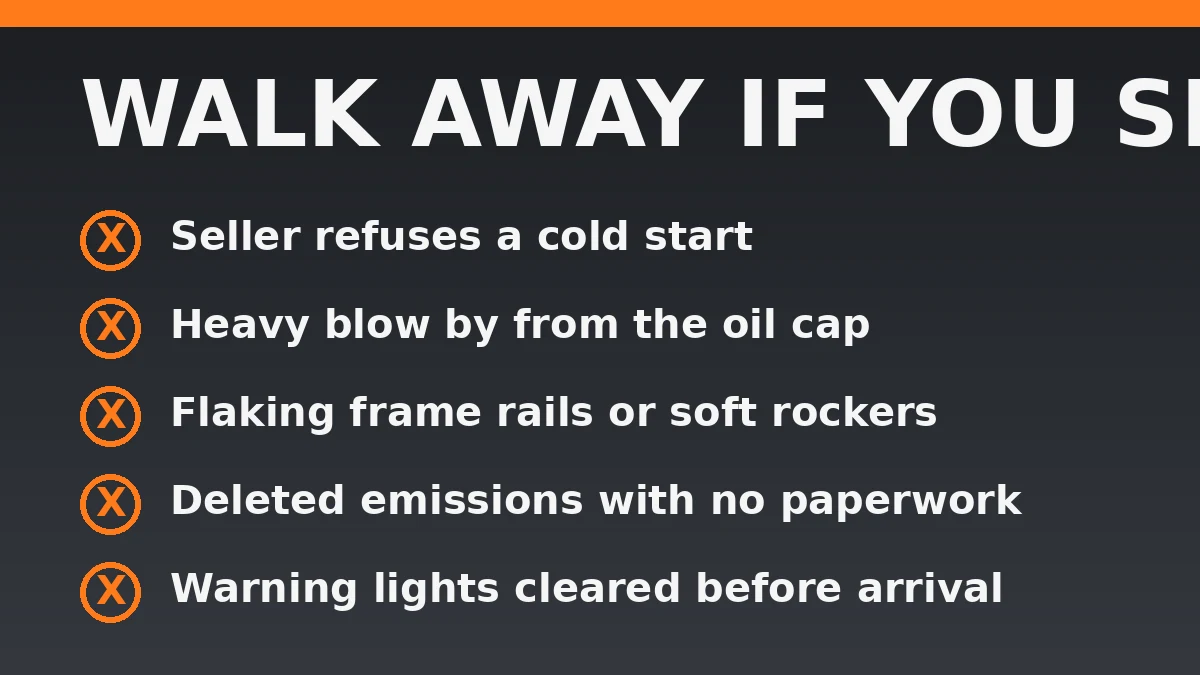
Walk away when the seller refuses a cold start, refuses a shop inspection, or rushes you. Walk away from heavy blow by, a rotted frame, or warning lights that were clearly cleared before you arrived. There is always another truck.
If the truck passes your checklist, spend the money on a pre purchase inspection at a diesel shop. It costs a couple hundred dollars and it is the cheapest insurance in the truck world. Pair this checklist with my ranking of the best used diesel trucks to buy in Canada right now and you will shop with confidence instead of hope.
Frequently asked questions
Should I buy a used diesel truck without service records?
I would not, unless the price reflects the gamble. Records tell you the oil was changed, the fuel filters were done, and someone cared. No records means you assume the worst: neglected filters, a tired CP4 pump, and deferred maintenance. If you still want the truck, budget for a full service and a fuel system check on day one, and pay less for the risk.
What is the blow by test and how do I do it?
With the engine idling, loosen and lift the oil fill cap so it sits loose on the tube. A little vapour is normal on a diesel. If the cap dances, blows off, or a steady stream of smoke pours out, the piston rings are worn and combustion pressure is leaking into the crankcase. That is an engine rebuild, and it costs more than most used trucks are worth.
How much rust is too much on a used diesel truck?
Surface rust on the frame is normal in Canada and can be treated. Walk away from flaking frame rails, holes in the rockers or cab corners, soft floor pans, and rust around spring hangers and brake lines. Body panels can be replaced, but a compromised frame cannot be fixed cheaply. I have condemned more trucks for rust than for engine problems.
Is a cold start really that important when inspecting?
It is the single most important test. A warm engine starts easily and hides weak glow plugs, tired injectors, low compression, and battery problems. Tell the seller you want to start it cold, and show up unannounced if you can. If the truck was warmed up before you arrived, come back another day or treat it as a red flag.