

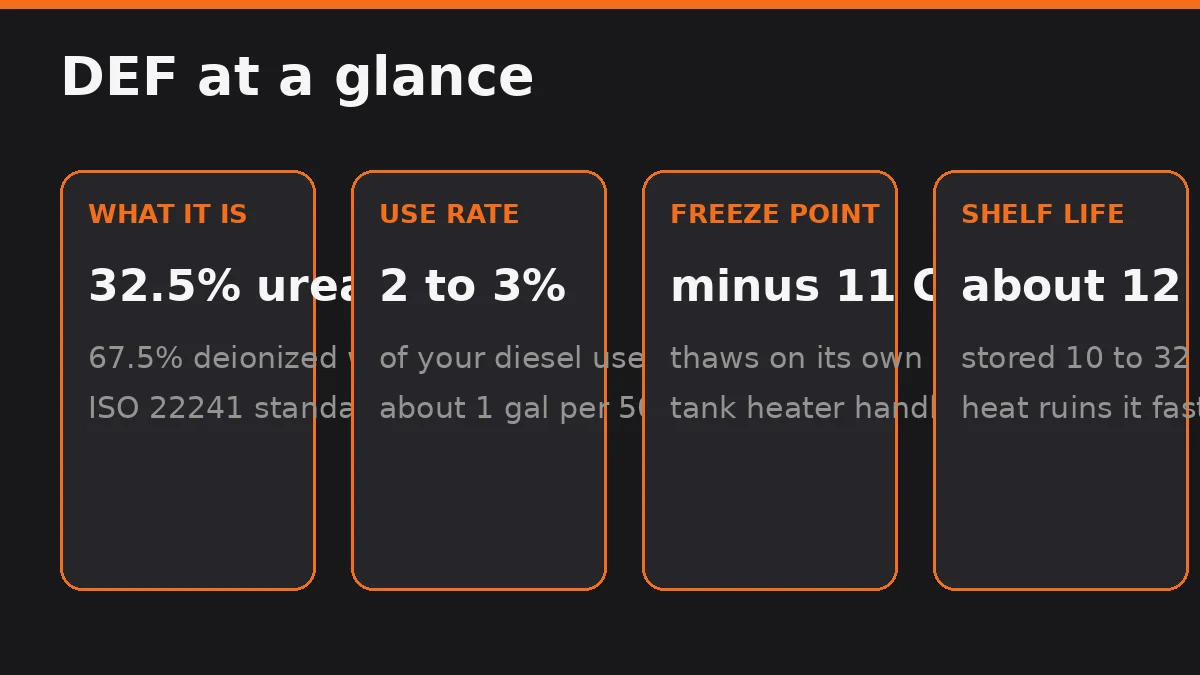
DEF is a mix of 32.5 percent urea and 67.5 percent deionized water that your truck sprays into the exhaust stream to turn NOx into nitrogen and water. A pickup uses about 2 to 3 percent as much DEF as diesel, so figure roughly a gallon of DEF for every 50 gallons of fuel. It freezes at minus 11 Celsius, it goes stale if it sits hot for months, and the cheapest way to buy it in Canada is at the pump at a truck stop.
- DEF is 32.5 percent urea and 67.5 percent deionized water, built to the ISO 22241 standard, and it exists only to feed the SCR catalyst
- Expect DEF use around 2 to 3 percent of your diesel use, and a bit more when towing hard or idling a lot
- It freezes at minus 11 Celsius and thaws on its own, but heat and old age are what actually ruin it
- Contaminated or expired DEF is the number one cause of the quality sensor codes that put trucks in limp mode
Every diesel pickup sold in the last decade drinks two fluids. Everybody knows about the first one. Almost nobody respects the second one, and that is where the expensive phone calls start.
What DEF actually is
DEF stands for diesel exhaust fluid, and the name oversells it. It is not fuel, it is not an additive, and it does nothing inside your engine. It is a simple mix of 32.5 percent automotive grade urea and 67.5 percent deionized water, made to the ISO 22241 standard. That is the whole recipe. Nothing in it is exotic, which is exactly why it works.
Your truck stores it in a tank with a blue cap and sprays a fine mist into the exhaust ahead of the SCR catalyst. The heat turns the urea into ammonia, and the ammonia reacts with NOx in the catalyst to form plain nitrogen and water vapor. That chemical trick is how modern diesels meet emissions rules while still making big power. No DEF, no NOx conversion, and the computer knows it.
The purity matters more than the brand. DEF is a commodity, and a jug that meets the standard from any honest store is the same fluid as the jug with the fancy label. What ruins DEF is contamination. Two teaspoons of oil in a 5,000 gallon tanker is enough to spoil it, according to the fluid suppliers, which tells you how little margin there is. Keep the filler neck clean, keep the cap on, and never pour DEF from a jug that has held anything else.
How much your truck actually drinks
Cummins puts the average at 3 to 5 percent of fuel consumption across its engine range. In real pickup life, most 6.7 litre trucks land around 2 to 3 percent. A handy way to think about it is one gallon of DEF for every 50 gallons of diesel. On a truck getting reasonable mileage, that works out to a DEF fill every 5,000 to 7,000 miles or so, and many owners find the DEF refill lines up nicely with the oil change.
Towing changes the math. High heat means high NOx, and high NOx means more DEF sprayed. If your DEF use suddenly doubles with no change in how you drive, get it checked.
What it costs in Canada
DEF is cheap next to everything else your truck consumes. A 9.46 litre jug at a big box store in Canada runs in the mid 30s Canadian dollars, more than the same jug in the States, but still small money next to diesel and oil.
The real savings are at the pump. Truck stops with DEF at the island sell it by the litre for far less than the jug price. If you are anywhere near a truck stop regularly, top up there and keep one sealed jug in the shop for emergencies. For fleet guys and anyone with room to store it, bulk totes bring the per litre price down again. Just remember the shelf life rule below before you buy a tote for a truck that sits half the year.
The cold weather part
This is the question I get every October in Alberta. DEF freezes at minus 11 Celsius. Your truck already knows this. The tank has a heater, and the lines purge themselves after shutdown so no fluid sits in them to freeze. When you start up cold, the system waits for the thaw, then resumes dosing like nothing happened.
Freezing and thawing does not damage DEF. It is designed for it. What you should not do is add anything to lower the freeze point. Cummins is blunt about this. No anti gel additive, no freeze point improver, ever. Those chemicals interfere with the SCR chemistry and can damage the system. The truck handles the cold on its own. Let it.
Winter brings one real DEF headache, and it hits the fuel side too. Short trips and long cold idles keep the exhaust cool enough that the SCR works poorly and dosing gets erratic. If you want the full winter picture for fuel, I wrote it up here.
What goes wrong, and what it costs
Almost every DEF problem I see traces back to one of three things.
First is bad fluid. Expired jugs, jugs stored hot, or fluid contaminated by a dirty funnel. The quality sensor flags it, the truck throws a code, and if you keep driving it starts derating. I covered the sensor codes in detail here, including why the code keeps coming back after you clear it.
Second is the wrong fluid in the tank. Diesel in the DEF filler is the classic one, usually from a tired owner at a dark fuel island. The blue cap is supposed to prevent it, but tired people defeat blue caps. Diesel in the DEF tank means draining, flushing, and often a new injector, because the crystals and contamination plug things that do not unplug.
Third is running the tank dry because the gauge fooled you. It reads full for a long time, then drops fast. Top it off when you fuel up and you will never meet the countdown timer.
None of these are wear items failing. They are all owner inflicted, which is actually good news, because they are all preventable.
The rules I give every customer
Five rules, and DEF will never cost you more than the fluid itself.
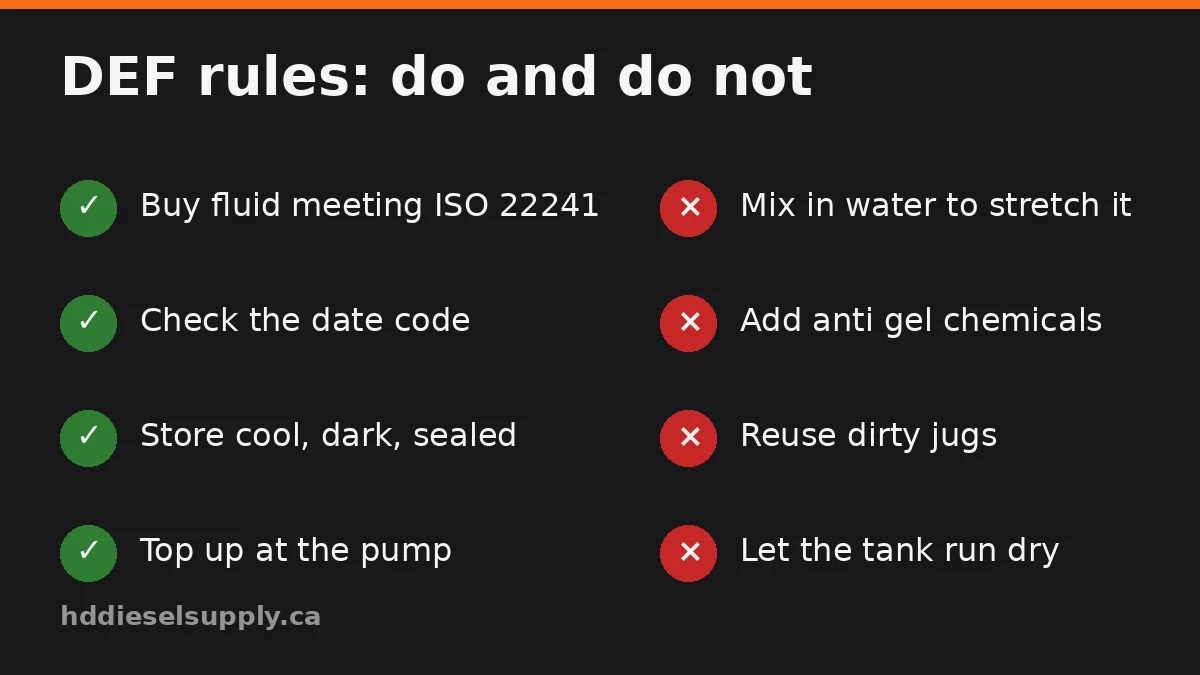
Buy certified fluid. ISO 22241 or the API mark on the jug. Brand is irrelevant, standard is everything.
Buy fresh stock from a busy store. Check the date code. A jug that has sat on a warm shelf for a year is a gamble.
Store it cool, dark, and sealed. Use what you buy within a few months. Do not stockpile for a truck that barely moves.
Keep the filler clean. Wipe the neck, use the spout that comes with the jug, and never reuse a jug that held something else.
Top up at the pump when you can. It is cheaper, it is fresh, and it means you never stare at a countdown timer on the highway.
The verdict
DEF is the cheapest system on your truck to maintain and one of the easiest to ruin through carelessness. Buy fluid that meets the standard, keep it fresh and clean, and never let the tank run dry. Do that and the SCR system will quietly do its job for the life of the truck.
Frequently asked questions
Should I buy the cheapest DEF I can find?
Yes, as long as the jug says it meets ISO 22241 or carries the API certification mark. DEF is a commodity chemical, so the brand on the jug matters far less than the standard. What matters is that the jug is sealed, recently made, and stored out of the sun. Buy from a store that moves volume so the stock is fresh.
Can I stretch DEF by mixing in water?
No. The quality sensor measures the urea concentration, and the system expects 32.5 percent. Water it down and the truck will flag poor quality DEF, derate power, and eventually limit your speed. You will not save money. You will buy a tow.
Does DEF go bad?
Yes. Stored between about 10 and 32 Celsius, DEF keeps roughly 12 months. Above that it degrades faster, and jugs baking in a hot shed all summer are the classic way to buy yourself a quality code. Keep no more than you will use in a few months, store it cool and dark, and check the date code on the jug before you pour.
What happens if the DEF tank runs dry?
The truck warns you well in advance, then starts counting down. Ignore it long enough and the truck limits your speed to a crawl, sometimes as low as 8 kilometres per hour. Add DEF and the derate clears once the system sees good fluid. This is a designed in feature, not a failure.