
A 6.7 Cummins CCV delete reroutes crankcase vapour away from the intake instead of letting the factory system feed it back through the turbo. Most of the trouble owners blame on the CCV system actually comes from one part: the crankcase filter on top of the valve cover, which clogs with age and pushes crankcase pressure up. Replacing that filter on schedule fixes the problem for most trucks. Venting blow-by to atmosphere is not road-legal, since crankcase ventilation is part of the emissions system, and a closed-loop catch can is the compliant alternative.
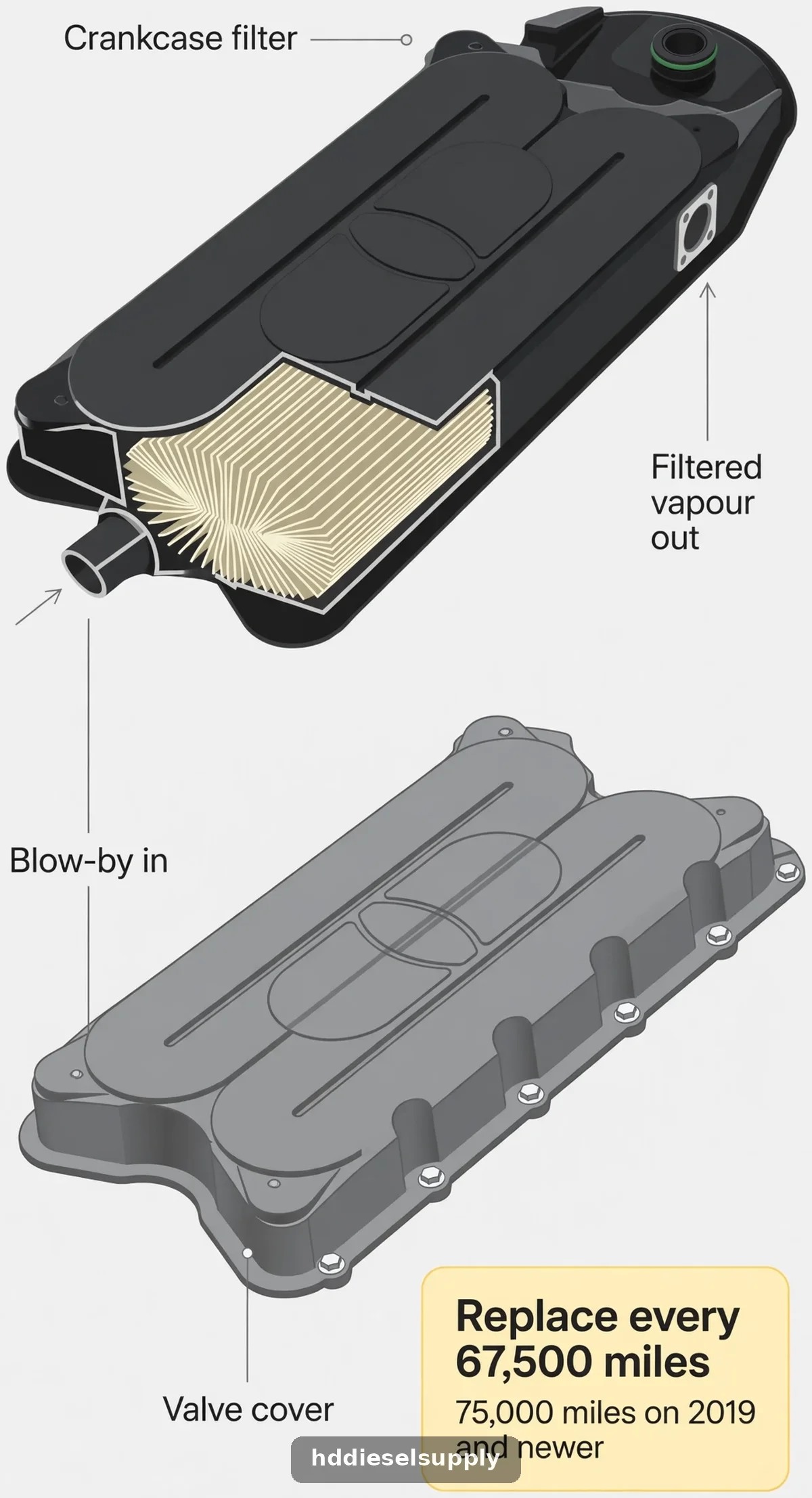
- The 6.7 Cummins CCV system routes blow-by gases and oil mist back into the intake, through a crankcase filter that sits on top of the valve cover.
- That filter clogs with age. When it does, crankcase pressure climbs and oil starts finding its way past seals and into the intake.
- Ram lists the filter as a scheduled service item, roughly every 67,500 miles on the earlier trucks and 75,000 miles on the 2019 and newer trucks. Check your owner's manual for your year.
- A CCV delete or reroute vents the crankcase somewhere else. Venting to atmosphere is not road-legal. Replacing the filter on schedule is the fix most trucks actually need.
The 6.7 Cummins has a filter most owners have never heard of, and it causes more trouble than almost any other part nobody maintains. It is the crankcase filter, it sits on top of the valve cover, and by the time a truck rolls into my shop with oil leaks in three places at once, that filter is usually years overdue. I am a Red Seal heavy duty mechanic in Alberta, and this is the conversation I have with Cummins owners who are one search away from buying a CCV delete kit.
The 6.7 Cummins crankcase filter most owners never hear about
Every diesel pushes a little combustion gas past the piston rings. That is blow-by, and it carries oil mist with it. The crankcase has to breathe, so the factory CCV system routes that vapour back into the intake, where the engine re-burns it. On the 6.7 Cummins the vapour passes through a coalescing filter first. It strips the oil mist out of the gas before the gas reaches the intake.
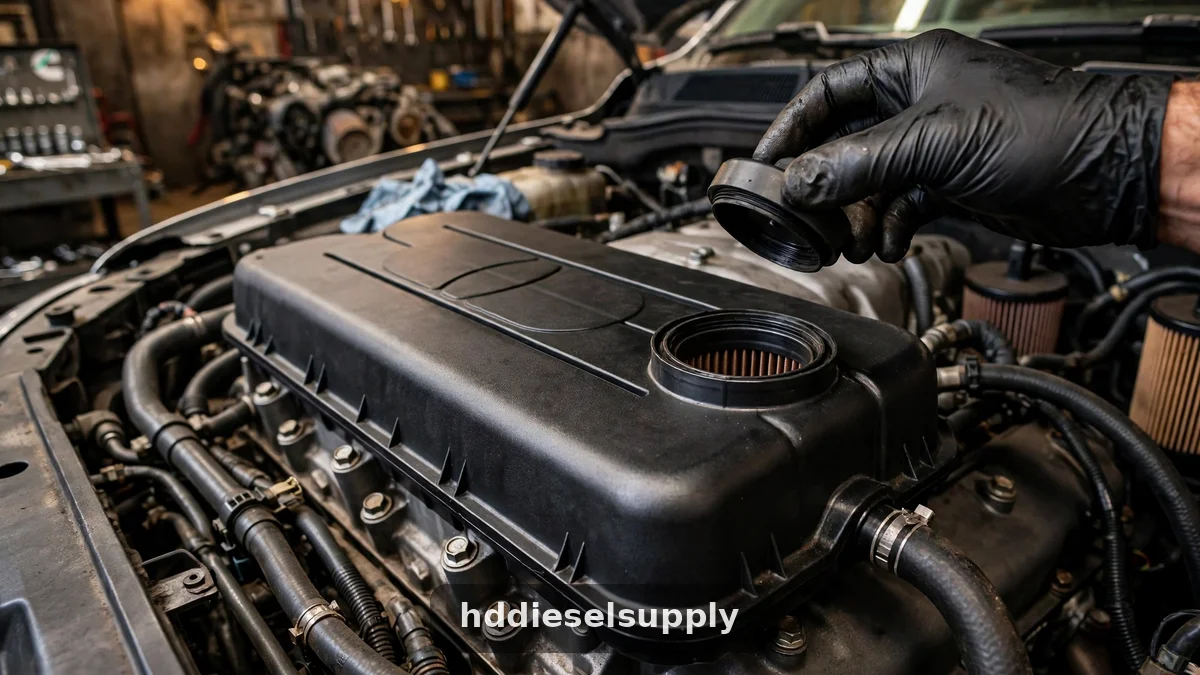
The filter lives on top of the valve cover, under the plastic dress cover. It is a wear item, not a lifetime part. The media loads up with soot and oil over thousands of miles, and once it is saturated it stops separating oil and starts restricting flow. That is when the trouble starts.
Ram lists the filter as a scheduled service item. The earlier trucks are generally on a 67,500 mile interval, and the 2019 and newer trucks on a 75,000 mile interval, but the schedule varies by year and chassis, so check your owner's manual for your exact truck. The published interval assumes average use. A work truck that tows heavy and idles long loads the filter faster, and it is worth a look earlier.
What happens when the CCV filter clogs
A clogged filter does not fail with a bang. It builds up slowly, and the symptoms arrive in a pattern that every pressure problem shares. Crankcase pressure climbs, and that pressure has to go somewhere.
| What you notice | What it points to |
|---|---|
| Oil leaks from more than one seal at once, often the valve cover first | Pressure pushing oil past weak seals |
| Oil film or pooling inside the intake pipes or turbo inlet | More oil mist getting through a saturated filter |
| A "Perform Service" message on the cluster | The scheduled maintenance reminder, not a sensor reading |
| Code P1507, crankcase filter restriction | A scan tool reading that points at the filter itself |
| Rising oil consumption with no drip on the driveway | Oil leaving through the ventilation path |
| Rough idle or blue smoke on cold start | Oil mist burning in the combustion chamber |
Two things worth knowing before you order parts. First, the "Perform Service" message is a timer, not a sensor. It comes up when the scheduled interval arrives, whether the filter is clogged or not. Second, a P1507 code is a stronger signal than the message, but it is not proof on its own. A frozen or pinched vent hose in sub-zero weather can set it too, so check the hose.
And one more honest warning: a fresh filter will not fix excessive blow-by from worn rings, and it will not clear a blocked hose. If the pressure symptoms stay after the filter is changed, the engine needs a proper diagnosis, not another part.
6.7 Cummins crankcase filter delete: what it actually means
This is the part where the search term gets confusing, because "crankcase filter delete" can mean two different things.
The first is a reroute kit that bypasses the filter entirely. The crankcase vapour is sent somewhere else, either through a catch can or straight out a hose, and the factory filter stops being part of the picture. The second is a delete plate that blocks off the filter housing for good, paired with a reroute.
Both versions do the same thing in the end: the filter is gone, and the crankcase breathes somewhere else. The appeal is obvious. No more filter to buy, no more service message, no more clogged media pushing pressure up. But the filter was never really the problem. The problem was that nobody changed it. Deleting it trades a cheap maintenance item for a modified emissions system, and that trade rarely pays off.
Delete or reroute vs replacing the filter on schedule
Here is the comparison the way I would lay it out for a customer standing at my counter.
Replacing the filter on schedule. The filter is accessible, the swap is quick, and it keeps the system working the way it was designed. The truck stays compliant, the service message goes away, and the pressure problem is gone until the next interval. This is the right answer for nearly every truck that comes through my door.
A closed-loop catch can. The vapour runs through a separator that traps the oil in a can you drain, then returns to the intake. The intake stays cleaner than stock, and the loop stays intact, so this is the compliant option. The catch is the maintenance: you have to drain the can on schedule, and in a cold Alberta winter a full can that freezes is a real problem.
A vent-to-atmosphere reroute or delete. The crankcase vents outside the truck, and the intake stays dry. But it is not road-legal, it can smell, and it can drip oil. It also removes the filter from a system that was working fine once the filter was fresh. I have seen owners do this, still get oil leaks, and then discover the real problem was a worn seal all along. The delete did not fix anything. It just removed the part they were blaming.
If the EGR system is also on your mind, the same logic applies there. Our 6.7 Cummins EGR delete kit guide explains why fixing a failed part beats deleting the system, and the CCV filter is the same story on a smaller scale.
The legal note, plainly
Crankcase ventilation is part of the emissions control system. Venting blow-by to atmosphere is tampering with that system, in the same category as other emissions deletes, and it is not road-legal in Canada or the United States. That holds whether or not your province or state runs emissions testing. A closed-loop catch can that keeps the vapour returning to the intake does not cross that line, because the loop stays intact.
I am not going to dress this up with numbers I cannot verify. The point is simple enough without them: if the vapour leaves the truck, the truck is not compliant. If it stays in the loop, it is.
How to check yours before you spend money
Before you buy a kit or a filter, spend ten minutes looking at the truck.
First, pull the dress cover off and look at the filter housing and the hoses around it. Fresh oil around the housing or a cracked hose tells you more than any forum thread will.
Second, check the service history. If the filter has never been changed and the truck is past the interval, start there. It is the cheapest possible fix for the symptoms in the table above.
Third, if the filter is fresh and the pressure symptoms are still there, get the engine checked. Our 6.7 Cummins reliability guide covers what these engines typically need at higher mileage, and excessive blow-by is a wear problem, not a ventilation problem. No reroute kit fixes worn rings.
The bottom line
Most 6.7 Cummins CCV delete searches start with a truck that has oil leaks, a service message, or an oily intake, and most of those trucks just need a filter. The crankcase filter is a scheduled service item, it is easy to reach, and replacing it on time keeps the pressure down and the intake clean enough. A delete trades that cheap fix for a modified emissions system, and a vent-to-atmosphere reroute makes the truck non-compliant. If you want the intake cleaner than stock, a closed-loop catch can does the job without crossing the line. Change the filter, keep the loop intact, and spend the delete money on something the truck actually needs.
Frequently asked questions
What happens when the 6.7 Cummins CCV filter clogs?
Crankcase pressure climbs because the blow-by gases cannot get out as freely. That pressure pushes oil past seals, carries more oil mist into the intake and turbo, and can show up as new oil leaks, rising oil consumption, a rough idle, or blue smoke on cold starts. The truck may also set a crankcase filter restriction code.
Should I delete the CCV system on my 6.7 Cummins?
For most trucks, no. The delete solves a problem that a new filter usually solves on its own. Venting blow-by to atmosphere is also not road-legal, since crankcase ventilation is part of the emissions system. If the filter is fresh and you still want a cleaner intake, a closed-loop catch can keeps the loop intact.
How often should I replace the 6.7 Cummins crankcase filter?
Ram lists it as a scheduled service item. The earlier trucks are generally on a 67,500 mile interval and the 2019 and newer trucks on a 75,000 mile interval, but the schedule varies by year and chassis, so confirm it in your owner's manual for your truck. Trucks that tow heavy or idle long are worth checking earlier.
Can I replace the CCV filter myself?
Yes, it is one of the more accessible jobs on the engine. The filter sits on top of the valve cover, under the plastic dress cover, and the swap is a matter of removing the cover, a few fasteners, and the old filter. If your truck is showing a service message, check whether it is a scheduled reminder or a restriction code before you assume the filter is the problem.